Thursday, September 02, 2010

SuperTechno 100

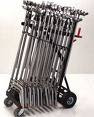
Our friend Ian sent us pictures of the new 100' Technocrane being tested in Germany. Thanks to the guys at Supertechno for permission to post them.

Friday, August 27, 2010

One Piece At A Time

  I can remember as a young Dolly Grip how nothing got my palms sweating more than a big dance floor move. It was hard enough doing one where all the points are known and you got a chance at a couple of decent rehearsals. But the really scary ones were the ones that evolved as you went through a rehearsal, with the director shouting out a new instruction at each point. "Tighten up when she leans in here" or "Boom down when he goes around" were added to the pile of instructions you already had in your head and before you knew it, the whole scene was a useless muddle while you broke out in a cold sweat wondering how you would ever remember it all, much less execute it. Over time I learned the secret: Take it one piece at a time. If you try to think about the move as a whole, it'll scare the hell out of you. Think of it in chunks, one building upon the other, until soon  it all comes together. Here's another secret. The actors will tell you what to do and where you should be. No, I don't mean to go up to Robert DeNiro and ask him where number three is. I mean that if you understand the shot, and move with the actors, it's a lot easier to remember what happens when. It's all about understanding the actors movements in the scene in relation to the camera as opposed to a bunch of mechanical "okay, now I go here" movements. Generally, in Dollygrippery, the camera moves when someone in the scene does. Watching where they go will tip you off quickly to where your next mark is. Recently I did one of these moves that just builds and builds with every rehearsal. The director was Jonathan Demme, a great guy but not afraid to challenge you. What started out as a simple half-circle around a desk countering an actor turned into a five point move with a boom from the bottom to the top of the arm and a couple after that. As the move got more complex, the old sweaty palms started. Then, I took a deep breath and remembered to watch the actors and think of it one piece at a time. I nailed it on the first take, except for a minor blockage on a line, and by the third take I had it down. This is the secret that will save you these pregame jitters. Don't make the mistake of trying to shoehorn the whole sequence into your short-term memory all at once. It doesn't work. Watch the actors.

On a totally different note, I'm missing some of my old buddies I used to hear from pretty regularly. Where are you guys? GHB has been silent, as well as Wick and my old friend Megamoose. Just drop me a line and let me know you're still out there.

 On a happier note, Dollygrippery would like to congratulate Sanjay Sami and his beautiful wife, Tara, on the birth of their baby boy. Mother and son are doing fine. Get some sleep, Sanjay. I'm not far behind you.

Sunday, August 15, 2010

Hit and Run

This post was suggested by my friend Larry, one of the best boom ops in the business. It refers to the unfortunate reality that sooner, or later, someone is going to be hit by the dolly. It's pretty much inevitable. You put several people, all concentrating on their own tasks in combination with a 500 lb machine careening around a small space, sooner or later it's going to happen. In all my years I can list as victims, several DPs, a few Boom Operators, countless extras, and, of course, myself, not necessarily in that order. Still photographers seem to be the most common victims. They're sneaky, they're focused, they're often oblivious to the world around them because they're looking through the eyepiece of a different camera as mine swoops (yes, it swoops) around the room during a scene. Let me say this right off the bat: I have a lot of respect for still photographers. They often have a thankless job. The crew never really quite knows where they fit in. They kind of come and go on their own schedule and are part of the publicity department, so are often seen as somehow not really part of the crew by other crew members. I myself am guilty of this train of thought, even though I know they are part of the camera crew. The best still photographers are like ghosts. You might catch a glimpse of one as you dolly in, but they quickly fade out of view only to appear on the other side of the room as you land. But there are those who just always seem to be in the way. They materialise directly on top of your number two mark as you race toward it, obliviously snapping pictures as you try to silently warn them of impending doom while your 500+ lbs of steel, camera, and operator races toward them. This type drives me nuts. I've got enough things to watch without having to worry about flattening someone who suddenly decides that the perfect shot can only be taken from the exact center of my trajectory as I bear down on them trying to execute a boom and a move while simultaneously watching some actor go through his paces. My rule of thumb is, warn them once. After that, it's every man for himself. As f
ar as actors go, I've only hit two in all my years: Forrest Whitaker and John Heard. Both were warned extensively before the shot where not to step. Both inadvertantly stepped right where they shouldn't have. Forrest was a complete gentleman and apologized profusely even as I apologized to him (though I knew it wasn't my fault). John Heard was a complete dipshit about it, howling in pain (the dumbass was wearing flip flops for off camera dialogue) like I had done it on purpose until the director walked up and told him, "You were warned. You have to look out for yourself at all times." The thing is, it's going to happen sooner or later, so it's best to cover yourself beforehand by warning all parties involved, "I'm pushing in/ moving left/ backing up, so be aware." After that, you can only do what you can do. If you happen to smack someone after duly warning them, it's their own fault and as bad as you may feel, you have to let it go. This feeds right in to the type of surface you choose for a particular shot. You want to avoid actors having to step over track as it is much more hazardous than dance floor. If you have to lead an actor as he/she walks directly in front of camera, offset the track and use a camera offset. If an actor has to walk across your surface, use floor when you can or ask the actor if he or she is ok with stepping over track. Most of the time they are fine with it, but always be aware of how your choices affect others during the shot. I once worked for a DP who didn't allow me to lay dance floor anywhere the actors walked. While noble, this is extremely impractical (and stupid). Needless to say, this adds hours to the day and compromises a lot of your work, trying to figure out how to do this. It's just a little over the top. Anyway, I digress. Just be aware of how your choices affect others and be sure all parties involved in the shot know what is going on. Keep your eyes open for potential disaster, and always CYA. This has been a public service announcement of Dollygrippery.

I have to add a second part to this post. I recieved an email from a reader concerning the correct way to top-mount a camera on a "Straight Shoot'r."  Having not used one in years, I must defer to you guys. Here is the email:

"I'm currently working with a Straight Shoot'r jib on the Fisher10. It came with the camera mount under-slung, and we needed to top-mount it for a shoot the other day. We worked out a way to top mount it that didn't feel 100% right or slide as smooth, but worked well enough for what we needed. I have found pictures online of what it should look like top-mounted and it looks like what we had. I was just wondering if any of you had any experience with this jib and any pointers?"

Thursday, July 29, 2010

This is What Dolly Grips in India Look Like.

Sanjay sent me this picture of Priyanka, his Dolly Grip in India. This is hands- down one of the coolest things I've ever seen. If she starts working in America, we're all out of a job*


*OK, just kidding. This is Priyanka Chopra, one of the most famous actresses in India (or probably the Eastern Hemisphere) and a former Miss World, posing with Sanjay's new Hybrid.  She's beautiful ain't she? (I mean the girl, not the dolly). Thanks to Priyanka and Sanjay.

Monday, July 26, 2010

Business as Usual

There's not much going on right now, other than work and sleep. My hometown of Atlanta is slammed with  feature work, while Los Angeles is sputtering along on TV. I'm working on a couple of post ideas, I just need time to write them. Hopefully this weekend I'll get a chance (unless I get a long turnaround). Stay safe.
D

Sunday, July 11, 2010

Where We Are

Every so often, I get a little fired up about our field. I (we) work a lot of thankless hours to deliver shots that really make or break a picture. We do it for much less pay than we're worth, and everyone but the producers generally know it. Since 2007, every year or so, I do a "state of the field" post. Usually it's after a few rum and cokes and often, I wake up the next morning in a mad scramble to correct whatever I wrote the night before. This year , I didn't really offend anyone, unless you're the kind of half-ass Key Grip who promotes your half wit brother or son to Dolly Grip because he needs a job. If you are, thanks for keeping us down. You are a big part of the reason our rates are what they are and why I have to demonstrate that I can do a compound move on each show.

I  started this site (I hate, HATE the word blog)  in 2007 to try and bring together the Dolly Grips of the world into some kind of community where we could all share our common gripes and also get a few tips from each other. Since then, I've made friends from all over the world. It's a strange thing about Dolly Grips, we have a profound impact upon the final image, yet we are often treated as less than important by production. Camera Operators know of our importance to the process. Believe me, I hear horror stories from them all the time of less than stellar "dolly grips" who can't hit a mark or have no concept of eyelines, timing, or blocking. You know the ones. They're bumped up by their  Key Grip brother-in-law or father, but don't know a camera riser from a seat riser. It's a joke perpetrated by guys who should know better. Yet, those of us who work at our craft are still often thought of as somehow less than integral to the process by production. It's an endless source of fascination to me that some cretin  who happens to be related to the Key Grip is suddenly a Dolly Grip, but it takes years of practice to become a camera operator. Here's the bottom line, dude. It's more than going from one to two. If you don't know that by now, you probably have no business being a Key Grip. I'm really happy you got your kid a job as a Dolly Grip, but he doesn't even know how to do a compound move or set up a dolly shot properly. Dolly Gripping is not an entry level position. It's like the old saying, " you never need a cop till there's not one around." Not that what we do is anywhere near as important as what the men and women of law enforcement do, but it's the same concept in our little world. I see it as my job day to day to keep production moving as quickly as possible. This means that I already know which side of camera the looks are on a turnaround, and have a plan for making it happen before the gate is checked. I make it my business to know where the camera is going to go before the DP tells me, how much track or floor I'll need, and any special equipment I'll need before it ever comes up. All of you know what I'm talking about. I had a dayplayer "B" camera "Dolly Grip" a while back who didn't know how to put the low mode on a Peewee 3. He promoted himself as a dolly grip but didn't know this most fundamental of tasks. This is what I've tried to help weed out with dollygrippery. I don't, by any means, count myself among the best, but I've spent years trying to become proficient in the basics of pushing dolly. And I'm pretty good at it. It ain't rocket surgery, but it is a craft. Just like bricklaying, or DPing, there are certain basics to the profession. Find the high point. Know your eyelines. Know your focal lengths. Know how to put the frakking low mode on a Peewee. These are things that we know as intuitively as our own names from doing it day after endless day for years. That's what dollygrippery is all about: knowing your craft. When I watch a movie and see a dolly move that takes my breath away, I say to myself, "nice work, brother*" and then I wait to see in the credits who did it. Because I know, as all of you do, what goes into it. More often than not, it's a friend or acquaintance of mine, which makes it that much more thrilling. I always lean over to my wife and say proudly, " I know that guy." This has no effect on her. She thinks I'm a nerd and rolls her eyes, but I'm proud for my friend because I know firsthand the artistry and discipline it takes to pull off a really difficult move. So I'd like to thank those of you who've become my friends on dollygrippery, and to those Dolly Grips whose work I so admire. You've made my life that much richer with your stories and comments. You all make it a little easier to do my own work knowing that you are all out there doing the same things all over the world. So the state of the craft, as I see it is, a little better than it used to be. I still run across operators and DP's who want to tell me every move to make, at least for the first day or two, but that's as it has always been. It has always seemed a little strange to me though that it seems to be taken for granted that Camera Operators and Focus Pullers are assumed to be competent from day one, but Dolly Grips spend the first week of a show auditioning. It's just this situation that I created Dollygrippery to help alleviate. To bring some sense of community to the Dolly Grip world and the Grip world in general. And here's another thing. There's a little story going around about certain members of a certain local being told they're, "Lucky to be working," when they call up the local to complain about the HBO rate or any number of things we should be protected from by our union each day. Here's a tip: I ain't "lucky" to be working. I work regularly because I sweat my ass off to do the best job I can, and like the other working Dolly Grips in this business, I deliver. Luck has very little to do with it and being told this by those I pay to protect my interests is an insult to those of us who are in the trenches every day and look to  for our protection. So shut it.
Deep breath.
Anyway, this turned into a little more of a rant than I intended. Thanks to all of my readers. Stay safe and keep it between the ditches (after your 14 hour day).


*This doesn't preclude the contributions of sister Dolly Grips. Unfortunately, our sisters haven't made inroads into pushing dolly like I hoped they would. I know of several kickass female grips who I would put up against anyone. Alexa is the only sister Dolly Grip I know personally. I would love to hear from more of you, so write in and tell me your story.

Saturday, July 10, 2010

New From Chapman


This is one of the newest things that Chapman is developing. It's an offroad dunebuggy set up for hard mounting or Steadicam. Clearly for MOS shooting.  Ask them about it next time you're there.

PS- I had another post up this morning but I'm not satisfied with it, so I'm rewriting. It'll be back up soon.

Tuesday, July 06, 2010

What's Your Favorite Crane?

Another site I frequent had a question from a grip who is in the market for a crane as to which is the best. Immediately, I saw the makings of a post. A great many of the replies recommended the GFMs and Giraffe. First let's look at a few different kinds of cranes. The portable crane really changed the way a lot of movies are shot. The Louma revolutionized the industry with the ability to place a camera in a tight space and still deliver a crane move. Everyone's old favorite, the Lenny Arm continued this trend and before you know it, we were inundated with portable cranes, most from Europe or South Africa, and most named after animals. The Giraffe, Panther, Pegasus, Phoenix, and others greatly expanded the Dolly Grip's options and since they could be purchased, unlike the Lenny Arm, a lot of Grip's wallets. My earliest crane experiences were with the beloved Titan and the often cursed, but very effective Lenny. Then came the Giraffe, which due to it's ease of assembly and relatively light-weight components, became the most often seen, used, and purchased crane (at least in the markets I was working in). It snapped together quickly, could accomodate a rider at shorter lengths, and a "hothead" at longer (I believe up to 37'  if memory serves) configurations. It also didn't involve the large wrenches and cumbersome steel of the Lenny. Then, the Giraffe seemed to become less visible, and the Phoenix became the new favorite. Now, with Technocranes everywhere, the Phoenix seems to be the most used portable crane when the shot doesn't call for an extendable arm. I like the Phoenix. Gentlemen Grips, who I work for often, has two, and they are easy to put together, more solid than the Giraffe, and have a minimum of "whip" even at the longest length. The Lenny arm will still get it done, with a little more work (how many of us have put it together and realized we'd forgotten to put the "ears" for the cables between the sections?). One thing's for sure, it's a solid choice because it's an ultra-reinforced chunk of steel. I think you could hit it with a stakebed and it would probably destroy the stakebed. For jibs, I prefer the Fisher 23. This is the best non rideable portable crane in  existence in my opinion. For ease and speed of assembly and great action on the bearings it can't be beat. I like the Hydrascope and really want to see the new 70 footer. I also like the Moviebird just for it's great arm swing and really easy action at almost 50'. These of course are my own opinions and experiences and not at all the rule. There are a lot of portables I haven't tried, such as the GFMs and Panthers. Give me some feedback. What are your favorites?


I wrote this on my wife's fancy tiny computer,which I can barely see. It's almost like writing a post on my cellphone, aside from the fact that I'm in Vegas and likes my Vodka drink. Therefore, it's not the most well written post I've ever done but I hope you get the gist.
D

Sunday, July 04, 2010

Happy 4th!

Happy Birthday America and thank you to those who have served and still serve our country!
I'm off to Vegas for three days. Have a great week!

Monday, June 21, 2010

Another Season Over...

Well, another season of my tv show is coming to an end. I now get about two weeks off and go right into another (yes, at the crappy cable rate, but it keeps me here and the rentals help out). I didn't do the whole six month run this time. I just didn't have it in me and I had made a deal with the boss that if a real paying gig came along, I was going to take it. So I had a three month reprieve while I went to do a feature out of town for a substantially higher rate. Here's the kicker. We worked nine hour days. I couldn't believe it. My checks at the end of the week weren't that much more than they were on the tv show I had just left. So I did that job and then my boss graciously allowed me to return to the show and finish it out (much to the relief of my B Camera Dolly Grip who had bumped up into my spot and looked like he had just about had all he was inclined to take. All in all, another good season with a great bunch of people. As usual, here's what I learned:

Bad coffee is not necessarily better than no coffee.
Beware of actresses offering goodbye hugs.
Pie is hard to get out of your ear.
Sunscreen. Always.
Build the beams.
Better yet, have the riggers build the beams and drop them off.
You don't necessarily need pneumatics.
There is more than one cool Frenchman. (I only knew one before. Frenchman that is).
Make things harder on yourself on purpose if you want to get better. (I knew this one but the cool Frenchman reminded me).
Roundy isn't just for going around things. (I have a previous post about this one).
To quote the song, "I ain't as good as I once was, but I'm as good once as I ever was." (This has really no bearing on anything. I just like that saying and I'm practicing for when I'm old).
Cable shows will save money no matter how much it costs.
Don't drink with the British unless you're off the next day.
If you do drink with the British, the next day will be the longest and hottest of the season.

That's about it. We've got a few more days and then a little time off. I for one could use it.

D

Tuesday, June 08, 2010

There But For The Grace of God....

"We'll go around this curve and maybe the car won't flip over."
                       -The stunt coordinator on a movie I did at age 21, speaking of the Shotmaker on which I was riding.


   Before you read this, read this: http://hollywoodjuicer.blogspot.com/2010/05/rainy-night-in-georgia.html and this: http://thehillsareburning.blogspot.com/2010/05/film-set-tragedy-lessons-learned.html.
  OK, now that you're back, I want to relate my experience with this incident. I recieved a call from one of my readers (who I'll call Andy) right after this happened. Andy was very upset because this production had contacted him previously about working this shoot and he had declined the job. More importantly, he had warned the production coordinator that they needed to have an experienced rigger as well as gaffer before attempting any of the things they wanted to do. When Andy called me, he was furious, upset, and confused about what was a completely avoidable situation that they were WARNED about. Georgia being my backyard, I made some calls to find out the details. I didn't learn much, only that the "local" gaffer was no one I knew, and the crew was made up of students. This immediately told me three things: these guys had no business doing the things they were doing, this promising young man died as a direct result of this fact, and this could have easily been me twenty years ago.
  The film business is a nebulous world at best. Staffed by freelancers, crews tend to move around a lot. They get work mostly by reputation, and there aren't any real competency standards. As far as production knows, the guy tightening the bolts on the truss hanging over Tom Hank's head has a serious coke problem and was just released from prison this morning. It's up to the people doing the immediate hiring- the Key Grips, and Gaffers, to ensure that their crews are competent and safe. As a fresh faced twenty year old, I was just excited to be a part of this world and I didn't really think too much about the danger level of the things I was often asked to do, or the sanity of the person asking me to do them. You want me to hold this 2x4 and whack you with it if you get bit while tying-in? Okay. I'm just honored to be the one you trust your life with. You want me to go rig this condor? Okay. Now which one is the crescent wrench? I would gladly do things I wasn't even remotely qualified to do, often at great danger to myself or others. As I got older and more experienced I learned when to say no, and more importantly, that I could say no. It's up to us to largely police ourselves, and as far as professional studio productions go we do a pretty good job. As a general rule, someone who is unsafe or incompetent is gone before lunch. The unions and studios  have stepped up their attempts to lower the probability of accidents (and lawsuits) by instituting the safety passport program. This only applies to West Coast locals, though, and the "tests" at the end of the classes are arguably geared toward the  most moronic among us. The union/ studio world also tends to be a little "smaller." Most of us know who the players are and the bad apples get bad reputations pretty quick. It's the world of student films and low budget productions where more things are apt to slip through the cracks. The bottom line is this, and I think Michael Taylor said it best: it takes years to learn and master gripping and juicing. If you haven't put a lot of time in with a lot of experienced mentors, you've got no business rigging a condor or running the kind of power it takes to juice up a film set with 18k's. You wouldn't hire a college freshman to plumb or wire your house, why would you trust him or her with thousands of volts or steel over your head? This was a stupid, needless tragedy that happened because production didn't want or have the money to hire someone who knew what they were doing. They treated it as an afterthought. A hobby. And now they're trying to hide. Atlanta is full of top notch grips and juicers. I'd put a lot of them up against anyone in the business. A quick call to the union local or the film office could probably have resulted in someone willing to come out for a couple hundred to  help out some students. I actually lived very close to Monticello a few years ago. If I had been there when these guys were shooting, and had nothing else going on, I would have gladly gone and helped them out just for a free meal. I've got no problem helping students. And the first thing I would have noticed is the power lines. It's the most basic thing you learn when dealing with crane arms or condors. Scout the area and know what the hazards are.
    As you can see, at least two better writers than I have covered this unfortunate happening. I was just struck by how young this boy was and saw in him a little of that skinny, naive, but determined young man I once was. Then I was reminded of Andy's phone call and how upset he was that his advice to these students had been ignored. So if you're a young grip or juicer or just a student trying to break in, keep your eyes open.  Ultimately you are responsible for yourself.

Friday, June 04, 2010

Cinegear Expo

I'll be out at the Cinegear Expo tomorrow at Paramount (at least if I can make it after working all night). Hope to see some of you there. You can register online at cinegearexpo.com. It's 20 bucks at the door but it should be worth it.
D

Saturday, May 29, 2010

Moving On?

I've been slogging it out on network TV this year. First a pilot for CW, now on a series for NBC. I've encountered a few things:

The pilot had a big name director / producer. I won't mention names, but let's says he's gotten a bunch of TV shows off the ground (all having three letter titles). I pushed B dolly and had him within three feet of me all at time - screaming all the way, thankfully not at me, but at the rest of the crew (DP included). Seems he doesn't really like the whole "film making process...". Nerve wracking to say the least. Oddly enough, this was the second time I've pushed for B camera. I've always pushed A camera, but acknowledge that B camera is certainly a place to cut your teeth and hone your craft. I tip my hat to anyone who is part of a crew and has stayed pushing B.

On my current job, we've brought in a new guy to the crew to push B. He's a competent guy but also new to concentrating on dolly pushing and to the B spot. We've been able to share experiences and I've been able to pass along tips to help him get through this project - number one - don't be bullied into something you can't pull off. Yes, operator comfort is a priority, but at the same time, you have to be able to physically be able to do your job.

The show we're doing is of a CIA agent - so you've got the offices and enclosed spaces to deal with. I'm a big of NCIS and have more respect for the dolly grips on that show for what they've pulled off episode to episode, season after season. Just the amount of coverage in the bullpen alone is mind boggling. I'm hating our set design so much. Lots of glass and reflections for me and the operator to contend with (my op is pulling his hair out!!) We're in "ninja suits" all the time.

Two mechanical things that have come up in our first four weeks of shooting: We've managed to tear off the front corner seat pocket cap on our Hybrid, not once, but twice. Seems the cap is screwed into only an 1/8th of an inch of metal (first time we shot screws into the ceiling). Yes, we were using an seat extension and no, the operator is not a heavy guy. I'm still working with our rental house on this and have put in an email to Chapman.

The replacement chassis groans more than I do. I dread doing dancefloor moves in our studio, as the floors of the warehouse aren't level and I don't always have all eight wheels on the ground. I thought it may have been a loose leg (once again, the front left), but after tightening it still sounds awful. Even now, if a seat is placed in that pocket, then the pocket creaks like a old wooden sailing boat.

We do alot of handheld work and I finally got around to assembling the Mitchell Tractor seat (only to discover two weeks later that Modern now has one). Its been a life saver and the operator loves it.

Saturday, May 22, 2010

Goodbye


You were smelly.
You were filthy.
You cost me a fortune.
Like a lot of Good Dogs, you were an immense pain in the ass.
You loved us every day and we miss you more than we could ever say.
Goodbye Old Man. Safe travels. See you down the road.
I love you.

Monday, May 17, 2010

Moviebird Review and Something Cool

I had been hearing a lot lately about the Moviebird Technocrane and was curious to try it out myself. Last week I got the chance. We used the MB 35/45 over several nights and I must say that it performed admirably. We put it through several paces including a full speed extension matching a running actress and it held up well. We got the crane from Procam Rentals and Tech David Hammer came out with it and was a pleasure to work with. The crane will operate at 35' max, or, with the addition of an extension, at 45' max. Hammer explained that at full 45' extension it does get a little whippy but that this can be alleviated somewhat by dropping it back down to 35'. We used it at full extension and while there was a good bit of whip to it on a fast pan, it was possible to finesse a lot of it out after a couple of runs. I have to say that at the full 45', just shy of what a 50' Supertechno would offer, the arm is extremely responsive and not near as bulky or clunky as a 50' Supertechno. The arm balances extremely well and doesn't require a lot of babysitting. The tilt dampener on it also works well and holds it rock solid. Set up is pretty much just like the normal Technocranes we're all used to. Altogether, I would have to say it's a solid choice and wouldn't hesitate to use it again.
 Moviebird, and Procam also offer lengths of 17',  24' and 30'.
All in all, the only con that I saw at all was the whippiness at full stick at 45', but this is almost balanced out by the easier maneuverability of the arm. Of course you would have to pick a crane based on your particular needs.
I liked it and I especially like the responsiveness of the arm at full stick compared to a 50' Techno.
Pickle wise, it seemed comparable to the Technos we all know and love.

You can reach Procam Rentals at 818-717-0354 and Hammer will give you all the details. Their website is procamrentals.com . Tell 'em Dollygrippery sent ya.


Now, for the "something cool."  Those of us who favor the Hustler 4 know what a pain it can be in outdoor rural settings. It's just a little low to the ground and heavy to get over roots and hills etc. While I was away on my movie, the boys on my series came up with a set of big wheels that mount into the sideboard receptacles. They screw in and though they aren't steerable, the Hustler pops up easy enough to allow a lifting bar inserted in the back to pop up the front and turn it. It makes a big difference. Thanks to Chapman for making them up. Here's a pic.


Friday, May 14, 2010

Tomorrow at Fisher...

...I won't be able to make it after all. I have to go do a daddy thing in Atlanta. Please, those of you who can make it, take some pictures and give a report on how it goes.

Monday, May 03, 2010

Show Wrap-up

I'm back and all went well. A lot of free form work on this job and the operator pretty much let me have my head on this one. He would usually say, "Just do what you think is right" and it all worked out. A real pleasurable way to work. I must make mention of the increasing scarcity of decent Birch for plywood. We paid 90.00 a sheet for the best we could find- assured by the lumber company that it was the best available. Within two weeks it was cupping, bowing, chipping and warping. We made it through, but probably couldn't have gotten much more out of it. Someone has to come up with an alternative to Birch. Maybe some kind of fiberglass or plastic 3/4" sheets that interlock to make a decent surface that won't warp. It would be a big initial investment but would last for years and eventually make money in rentals. Let's investigate. Anyway, thanks for staying tuned during my frequent absences. We are planning some cool things in the future when we can get time to make them happen.
  Don't forget the JL Fisher Open House and Barbecue in two weeks, Saturday May 15th at Fisher in Burbank. As it turns out, I probably will make it and hope to give a full report. I'll be wearing the "Dollygrippery" nametag so please say "Hi" if you're a reader. I'll also take any suggestions for future posts or activities. Please visit the Fisher website for directions and info. It's always a great time to meet old friends and learn about what's going on in the Dolly Grip world.


Vote in the new poll on the right.

Saturday, April 24, 2010

Crane Marking

Today's post is a guest post. I haven't been able to post as much, or prepare anything for a few weeks so I asked my buddy Greg Brooks to fill-in. Greg is a Dolly Grip's Dolly Grip. His credits include: the Showtime series Californication, and the Clint Eastwood films, Changeling and Gran Torino. He knows his stuff, you should listen to him.


CRANE MARKING
                                                                    "Good luck!"


A big part of what we do as dolly grips is operate camera cranes and jib arms. These too require the same soft touch and subtle corrections as a dolly but now you have to fight (or befriend) gravity and inertia. It can be quite challenging. Often times you are on a wide lens and you can wing it and get it close, but often times you are not and pin point precision placement is key and settling that crane into an over from thirty feet in the air is a skill like any other that challenges us as dolly grips. I've learned a few key tricks that can aid you immensely as a "bucket guy." This of course refers to the guy that is operating the crane and doing the primary arm movements from the handles at the rear of the crane. First thing I do is try to pick the back corner of the bucket that is between the action and the crane. Once a number one position is established by whomever is calling the shots, depending on the ground surface, I'll give myself a T-Mark (like the ones we use for actors) on the ground so I always come back and stand in the same place. Any mark will do, but the key is to have your feet in the same place every time because the camera can look like it's in the same place from thirty feet away from different foot positions. Secondly I look up at the camera which is where your eyes are going to be focused and match a vertical or horizontal line on the camera or the head with a vertical or horizontal line in the background. Sometimes it's the front of the matte box or the base of the head or anything like that. Then you just look beyond those two things and see what they fall in line with. The trick here is to not mark off objects that can move!! This is a mistake that we've all made a million times. Sometimes you'll mark off the top of a truck that you're sure will never move and then the 2nd A.D. comes out right before they yell, "Rolling!!" and asks for that truck to be backed up five feet!! Always stick with inanimate objects. I can't stress that one enough. I've been burned more times than I can think and my B-Dolly grip and I always tell stories about the times we've been burned by marks. The other thing you can do as a back up or as a primary mark is measure off your own body since sometimes the only thing to mark your first position off of is blue sky. So I make a note of where the back handle rubs against my side and remember the position. This is handy, but way less precise when you get into the very tight shots that your number two position is often establishing. So once your number one position is established, there will always be a number two and sometimes a three and four. I use the same procedure for all. The floor marks are really key for me because you can step into the mark as you are swinging around and then shift your eyes to the camera and land it in the exact place that you want and already have your feet planted so you can use your upper body strength to softly slide the camera to it's last mark. This system works pretty well for me. Again, I'd like to reiterate something that is stated on this site many times about being a good dolly grip. The most important part of all this is knowing what the shot is trying to achieve and knowing your lenses and what the shot will see at all your positions. I look forward to hearing some new methods from everyone.

Friday, March 26, 2010

Freeballing

In my experience, there are basically two kinds of shows. Those where the shots are meticulously planned out, and those where they aren't. On most sets, the director and DP plan out the shot with a finder. You get your marks. You know exactly what's going to happen and have a vague idea of where the camera needs to be at specific points during the shot. On others, the director or DP gives a vague wave of the hands and says, "Start here and go over here." You look at the Camera Operator and he rolls his eyes and mouths, "Good luck." Needless to say, the first kind are the easiest for me, although not always the most challenging. I'm presently doing the latter. It's a comedy with two high profile comedy directors (figure that one out). They are both great guys and the DP is a joy to work with. But there is a lot of vague hand waving and pronouncements of, "Start here and maybe we won't see the track." The Camera Operator, who is honestly one of the best in the world rolls his eyes and....well, you know the rest. The beauty of this system is the fun of not really knowing what is going to happen and having to adjust the shot as it unfolds. It gives the Dolly Grip more creative control over the shot and your skills really come into play. This style is affectionately known as freeballing. God bless my Camera Operator. He honestly asks  my opinion about shots and framing and gives me the freedom to make split second decisions as the scene unfolds. It can get a little frustrating sometimes, though, because I never really know what to set up because the rehearsals are so vague. What can be difficult is coming from a very rigid form of working to this freewheeling type of shooting. I've done movies where the camera placement was critical down to the inch. I was literally measuring the rooms to make sure I knew where the exact, symmetrical center was. You learn very quickly to look for clues as to where the camera should be- lighting fixtures or tiles in the floor are great indicators for lining up a symmetrical shot. It can be hard, though, to go from this style and be plunged directly into the less formalized one. I got a little testy today with my Focus Puller over a shot that we literally were making up as we went. I didn't mean to. I'm usually a pretty easygoing guy with my camera crews, but at one point I was just, like, "Dude, I don't know. It's the first time I've seen it and it was with second team." Now I'm a guy who prides myself on hitting marks. I don't miss often and if I do, I'll be the first to tell the focus puller that I was off by 2 inches or whatever. But when the actor is all over the place and you have to clear another actor and you are constantly booming up or down or adjusting left or right or in and out to hold the frame, things can get a little tense. I have to give it to our focus puller and operator. As challenging as my job can be on this movie, I can't imagine trying to hold focus or keep a nice frame with actors moving all over the place and the dolly constantly adjusting. All in all, although I do like the freedom to wing it, I am ready to get back to a more controlled style of working. The good side of all this is that it's very relaxed and mistakes are easily forgiven. It's a comedy, and comedies, in fact,  moviemaking in general should be fun. I once did a comedy years ago* in which we used the very rigid form of working which was not fun at all. The DP was a Jackass and everyone from the actors on down was tense and unhappy. Overall, I'll take freeballing any day.

*To this day, this was the most miserable experience of my career. Six weeks in Vegas and top rate and all I could think about was leaving. Someday, we will meet again, my friend.

Saturday, March 20, 2010

2010 Fisher Open House

The Annual JL Fisher Open House is coming up on May 15. Fisher always pulls out all the stops and puts on a great event with Barbecue and Beer. It's a great opportunity to catch up with old friends and aquaintances, swap some stories, and see the latest that Fisher and several other equipment providers have to offer. The Moving Camera Seminar is also always interesting and it's our time, as Dolly Grips, to be front and center. I, unfortunately, probably won't make it this year due to a prior commitment (my daughter is in a play that weekend), but strongly urge all of you to go. I will need someone to represent Dollygrippery if I can't make it to report on the goings-on and take some pictures. If you are a working Dolly Grip, or just someone interested in the field, it's a don't miss. If you go, be sure to mention Dollygrippery.

Sunday, March 14, 2010

Nerves

I can remember when I first started pushing "A" Camera. To say I was a little nervous is an understatement. Which way should I orient the Dolly? Should I use track or floor? I remember when working out a dance floor shot, the operator would keep adding positions and camera heights and I would begin to sweat. My anxiety increased with each new variable. How would I remember all this, much less actually execute it? As time went by, however, the anxiety began to dissipate as my confidence, and skills, improved. I would spend a little time before each show just practicing compund moves. I couldn't have imagined a time when a six point comound move with four camera heights wouldn't send me into the nervous sweats. Now, I don't even think about it. I even enjoy them. It's a little more of a challenge, and it makes us worth our money. Looking back, I think one thing helped me master this skill more than any other: TV. Episodic television is the perfect training ground for Dolly Grips and the older I get the more I believe it. The moves are consistently more complex, you're with people you know well from being around them for endlessly long days, and they're a little more apt to forgive mistakes. And you have to learn to be fast and accurate. You have to nail it by the third take, minimum. This is invaluable when you move to Feature world. Features move at a much slower pace (generally). By comparison, a TV dolly grip who knows his stuff looks like a whirlwind on a Feature set.  I try to go back and do a little TV every so often, and though it's a grind, nothing keeps you sharp like TV. So those of you who still get a little sweaty at the prospect of a seven point, five boom combo, stay with it. Believe it or not, there will come a day when you'll actually enjoy them. It just takes a little (OK, a lot) of time.

Sunday, March 07, 2010

Different Scenarios

There's a scene in Die Hard where the FBI agent, played by Robert Davi, assesses the situation and says, "This is a standard A-7 scenario." or something to that affect. This line comes to my mind whenever a shot or setup that seems all too familiar comes up. Once you've done this long enough, it's hard to find a shot, or variation of a shot that you haven't done. There are also common dolly set-ups that you just have filed away in your head that you can pull up from the memory bank and slam together without too much forethought. The standard A-7 scenario. You know with a Lambda Head that you're going to need a camera offset . You know you'll need a sideboard if it's a moving shot. And you know how to orient the offset in such a way that the camera operator can do the shot in a reasonably comfortable way. I generally always use a 12" riser with a Lambda also. It helps get the dolly arm away from the operator and I can still hit the floor with the head. After a while, you have dozens of these different set-ups floating around in your database. That's what helps separate a part-timer from a full timer. It takes years to build up a catalog of different scenarios to draw from. Over-Under Camera Rig? Bam! Got it. Twin Dollies Tied Together? Boom! Get me some pipe, sideboards for the Peewee and chain vice grips. Need to mount an actor on the dolly with the camera looking at him as he moves back? Front board and a camera offset. This database is what will save you valuable time and double work when someone else would be looking down and scratching their head.
On a different note, the show is going well. Again, the Camera Operator, Jaques, Matt, the DP, and Jeff, the
First AC are all top notch and a pleasure to work with. Internet service is spotty here, so I may be a little infrequent, but keep checking in.

Wednesday, February 17, 2010

Road to Perdition

The late Conrad Hall delivers a Master Class on How It's Done. My friends, if you've never seen it, rent it. I saw it on the big screen, but you can get a taste. A gorgeously photographed movie the way they used to do it. They don't make them like this anymore. Shout out to Dolly Grip Mike Schwake. Gorgeous work my friend. This is the movie we all wished we'd worked on.

Sunday, February 14, 2010

Hangin' At the Trade Show


Last week I had the pleasure of manning a booth for GI Track at Toronto's Feb Freeze. It's put on by one of the local's rental / expendable houses.

We had all sort of people come by, from students to producers. Of course our favorite people to talk with were grips and being able to show them the latest and greatest.

One of the downsides to the show was that it was during the week, but I understand the issues the organizers have to content with. Generally the turn out will be less on a weekend, and during the week people are working. Rough go either way.

Gil and I had a great time - lots of great stories shared and bunch of great new faces. I was my first trade show experience, Gil's second and our booth was placed between Mole Richardson and Yellow Jacket Cable Protectors. Those guys had been to all the shows before and were sharing stories with us. Hilarious!

Saturday, February 13, 2010

What's New at Chapman

I spent the morning at Chapman- LA checking out dollies for my next show. Shafi, the tech who sets up my dollies, offered to take me around to see what's going on in the various shops there. I had been through it before a few years ago, but it's been a while and this was the first time I had been there on a Saturday, giving Shafi an opportunity to take me around at a more leisurely pace. The most interesting thing was the new 75' Hydrascope, which Sam, the man building it, was happy to show me. It's still in pieces (big pieces), but it's going to be a beautiful arm. It will mount on a Titan base as well as have a smaller motorized base for other applications. I am really excited to see the finished product.
 I also saw one more future dolly, which I can't talk about yet (Ok, I didn't see the finished product, just a hollowed out chassis with a label on it). It's something that's been talked about for a while and I know a lot of you will be interested in, but I don't know when it will be finished or when I can expand on it. So enough about that.
I met a lot of the guys behind the scenes at Chapman, and got a lot better insight into what goes into building a dolly, from material delivery to final testing. As an East Coast Dolly Grip for many years, I never really had an opportunity to deal with their West Coast facilities or people. My dollies all came out of a local rental house or from the Chapman facility in Orlando, so, other than talking to Christine or Hector, I never really crossed paths  with them. The dolly is the tool of our trade, though, and we depend on these people to make sure our machines do what we need them to do. So, I'm making an effort to be a little more involved with the people there. If those of you who use Chapman have never been through the shop, or met any of their talented technicians, I suggest you drop by on a Saturday and learn what goes into making these fantastic machines that we all depend upon. Give them some feedback. If they don't know what we need, they can't help us. As Dolly Grips we have to have a relationship with them. They've always gone above and beyond the call of duty to make sure my dollies were right and I rest easier knowing that they're only a phone call away.

Monday, February 08, 2010

Feb Freeze

If you're in the Toronto area and not working, come on down to Pinewood Studios' Mega Stage for the Cinequip White's Feb Freeze. Tuesday Feb 9th, Open 11am til 8pm.

I'll be there all day manning the GI Track booth with Gil. Come by and say hello and talk dolly turkey!

Sunday, February 07, 2010

They Don't Know What We Do.

I wrote a post a couple of years ago about the fact that a lot of directors, and even a few DP's really have no idea exactly what it is that we do. I was going to repost it, but couldn't seem to find it, so I'll just add to it.
Our job is pretty deceptive. It looks pretty straightforward to someone who's just watching. We lay a track, put the thing on it, and go from one to two over and over.  A trained monkey could do it. Even a few Dolly Grips I've worked with over the years weren't sure exactly what  we do (or they were just really bad at it). They stand around and munch on doughnuts at crafty until someone calls them over and the operator tells them where to put the chassis and how to lay the track. Having not seen a rehearsal, they proceed to blow through about four takes until they finally hit one. I love those guys. As long as they're around, I'll always have a job. And we've all worked with the directors. You know the one who walks up after you've just completed a five point floor combo with three booms and a roundy into the end, and slaps the operator on the back, says, "great job but can you go a little faster?" and never even looks at you. He doesn't know what we do. Or the operator is setting up a shot with the finder and the director, looking on, asks, "can you do that?' You immediately speak up and say yes or "I can't get the camera quite that close to the wall." The director looks at you like, " Who is this guy?" and the operator looks at you and says, "How about here?"
We're there to solve the practical problems of setup, as well as deliver the movement, yet are often completely left out of the conversations concerning it.
I told this story once before but it bears repeating. I did a smallish feature a few years ago with a DP who had hundreds of music videos under his belt, but little or no feature work. Aside from being a dumbass, he also labored under the belief that he knew everyone's job better than they did. As a friend of the director, he had been given the DP slot on a studio feature. He proceeded to ignore every suggestion from the operator and myself, thus adding hours to each day. One day, after I had insisted on throwing down a piece of plywood to hold overs (I was tired of waiting for the young actors to magically hit their marks). We got it in a couple of takes and the DP walked up to the operator and said, "that was great. You held all those over the shoulders!" The operator said, "I didn't do anything, D did it!" The DP looked at me and said, "D did that?" This fracking DP on a 10 million dollar movie didn't even know what a Dolly Grip did. The operator said, "Yeah, he's the Dolly Grip." It's the same mentality that forces us to use a dolly that we are not as familiar with or simply don't particularly like as opposed to the one we've used every day for years just because the DP, inexplicably, likes a particular one. This makes no sense to me at all. If I do my job well, you won't notice or care which dolly you're on, and you might find that you like the one I use better. I've managed to turn several camera operators and at least one DP  on to my favorite. Generally, my job goes a lot smoother if they give me all the info, and then get out of the way. I often tell my present operator (an English chap) "Go get a cup of tea!" which is his cue to leave me to my business. I like to set it all up, and have them come back ten minutes later to a waiting camera, ready to go.
I will soon be leaving my show to go do a feature in Atlanta. Although I don't like doing this, the HBO rate just makes it more likely that a better offer will often result in people leaving. The Key Grip understands and was aware when I took the job that this would happen. Still, I'm leaving a great crew whom I love working with. I hope to come back afterwards to finish the season. So, for the next couple of months I'll be back at my home on the East Coast. My great B -Camera Dolly Grip will bump up and we've managed to get an old friend to come in on B. I hope it goes well. (But not too well ; ).

Wednesday, January 27, 2010

Going Live - Follow Up

Well, I got through it. It was a PBS concert special for the Canadian Tenors (with special guests Sarah McLauchlan and David Foster).

Thankfully not live to air, but was treated as such. 9 cameras - 1 jib on the balcony, 2 dollies, 3 handheld and the rest static.

Of the two dollies, one was at the back of the room and I was on stage left. This was a last minute change and really wasn't thought out properly. There wasn't enough space to get any proper angles and we had another camera shooting at us. I brought up the issues of hall beauty side lights that backlit both side camera positions to the director & DP. They agreed that the lights weren't required there. However, I tried to get the stage manager to clear "looky loos" in the wings, but that failed. I had a monitor to watch and cringed at the beautiful close ups of Sarah playing piano, but with three idiots in white shirts behind her. At one point there were so many people hanging about back there that I wished I could run around and get in the buffet line.

We didn't have any formal rehearsals, but did have a couple meetings to discuss what the director wanted. They band did go through the tops and bottoms of a couple songs - anything with choreographed parts. If I did anything like this again, I'd want and suggest to production to send out a head of time the album / songs that we were covering so the operators had an idea of the songs, timing and singers. In this case we had four roaming the stage with no real marks. Felt like two and a half hours of keeping overs.

I really felt crappy about the shots we were getting but I had to keep reminding myself that there were other angles to cut to. Thankfully, the director was pretty clear over the ClearComs and knew what he wanted.

Walked away with smiles and hope to do another concert like that.

Friday, January 22, 2010

Going Live

My background has been lodged firmly in feature film and television series - ok with commercials and music videos stuck in between.

I've been asked to work a live multi camera concert gig. It's working with a recording truck, director, headsets, etc.

I've never done anything like this before. Any suggestions? What should I be watchful for?

Friday, January 15, 2010

Repost of an Old Favorite: "Gripping Basics"


I'm a little short on time, and inspiration this week. 14 hour days, midnight company moves, wife out of town, and three dogs to care for (one is 15 and can no longer make it out the door, so he leaves me a little surprise every night), have all made finding time to post a little hard.  I went back through the archives and found this one. Since we've had some search hits for "grip description" it might be appropriate. My firm belief is that you have to put in a fair amount of time as a set grip before you can be an effective Dolly Grip. All of us on this site have spent many a night hauling sandbags and setting flags before we moved on to pushing dolly. A good Dolly Grip can work a set with the best of them. Here are a few tips to help those of you still in the trenches.

First posted 11/17/07. New comments added.

Someone contacted me recently and suggested I write a post on basic Gripping. Here are some tips:


Righty tighty, lefty loosey This one should be on a t-shirt. It's the Cardinal Rule. Learn it. It comes up a lot.


If they ask for a double, bring a single too.


When you set a 4x4 outside, use a combo stand.


When you set a flag, put the big leg under the weight.


When you set diffusion, fill the frame.


Put the diffusion at the angle of the light.


It will always start raining at wrap.


If you tie a 12x12 off to a sandbag cart, turn it sideways to the rag.


Gel closest to the light, then diffusion. In my original post, I got a comment from a grip who took offense at this one. He said he always puts the gel outside the diffusion and gave some lame ass reason for it. I took it easy on him. I shouldn't have. Gel goes before diffusion. Every experienced Set Grip knows this. So shut it. The other grips are laughing at you.


Bfl (big f#$%^g light), big f#$%g flag. One of the hardest things for me to figure out when I was a young grip was which sized flag to bring. In time, you'll get it. Generally, though, make the flag size correspond to the light size.


When laying track, level is good, getting the bumps out of the joints is better. If the track is consistent, the Dolly Grip can level it on the head. He can't correct for a huge bump in the seam though.


Always, ALWAYS bring everything. I'm guilty of breaking this one. It always bites me in the ass. Whatever you don't have is the first thing they'll ask for. To this one I'll add, Bring the Luma Beams.


If you bring a half-apple, also bring two quarters (and maybe a pancake).


Know your knots (clove hitch, bowline, truckers hitch, bohemian lesbian death hitch).


The "board stretcher" does not exist.


Neither does the "air hook."


"T-stops" are not in the jockey box (they are usually in the workbox, second drawer down).


If you keep two seats on the dolly, you are a chump. To this I'll add, to all you new Dolly Grips: If your focus puller needs to ride every shot, he's a moron. He's not the only one being taken for a ride. Miss your mark by six inches. Re-mark it.


The operator does not always need a sideboard. Don't just put it on there at the beginning of the day. Please.


Seat offsets are for the weak-minded. Apologies to certain Dolly Grips whom I really admire.


Always look at the set from where the camera is, it's all that matters.


Never fall asleep on an 8-step ladder. I did this one time. It wasn't pretty. I woke up on the way down.


Safety everything. It will fall. It will hit Katherine Heigle on the head. You will get fired.


Keep an extra jacket on the truck. It will always get colder than you think it will. Few things are more emasculating than wearing a fellow grip's jacket. Unless you're a female grip.


If you have a question, or don't know how to do something, ASK.  I get it. You're 22 and you don't want to look like you don't know something. I've been there. Trust me, everyone knows you're 22. They expect you to be respectful, keep your mouth shut, and your ears open. They will bury you. It will hurt.


As my friend Ted says, never be afraid to break something. Ted's a Rigging Key. He hangs thousands of pounds over poeple's heads.


Those are all I can think of for now...oh yeah, Murphy's Law applies more in this business than any other...if it can go wrong, it will. Never take anything for granted.

I still go back and set grip in between shows sometimes. It's good for the soul and makes me feel 22 again. (OK, it didn't hurt this much then, but you know what I mean).

Saturday, January 09, 2010

Chapman Hydrascope- Short Review


I used the 32' Hydrascope last night and must say I was very happy with it's performance. I didn't have time to really put it through any paces or ask all the questions I had, but I can say that the techs at Chapman have worked really hard to deliver an exceptionally finely-tuned arm. I know there had been some problems with the telescoping as far as hitting exact marks, etc., but these have been ironed out and starts and stops are sweeeet. The action on the swings and booms is very smooth with no friction problems or "settling back" upon landing. It's easy to lock off at the end of a move (I did it with one hand and it was solid as a rock). The telescoping action was fine and I didn't feel any vibration or chatter. The arm is hydraulic rather than electric, so has to be "pumped up" from time to time but it's no more intrusive than having to do it on a dolly. The tech, James, tells me they are beginning construction on a 70' arm, which I can't wait to see.
 All in all, you can call me a fan. The added bonus of having it on the Raptor base for exterior work made the whole thing a very positive experience and I won't hesitate to push for it in the future. Don't forget that the Hydrascope is immune to water, so for rain or underwater work, it's the machine to get.
 For more info, visit chapman-leonard.com.

PS- I should qualify this review with the fact that I did not actually use the pickle. I just didn't have time to play around with it, so have no experience in how well it works. Anyone who does is welcome to comment.

Sunday, January 03, 2010

Dolly Grip Job Description

This post is a case of catering to my search engine hits. I get a lot of hits from Google with the search title dolly grip job description. This inevitably leads them to my post Dolly Grips and the Camera Department. That post really doesn't actually describe the job, so I'm going to post this to lead prospective searchers here instead. Those of you who are regular readers may add to it in the comments or skip this post altogether. It ain't nothing you ain't seen before.
 The Dolly Grip is responsible for camera movement in the film world. We operate all moving camera platforms (except Steadicam) and are responsible for their maintenance and setup. We also work in conjunction with the camera operator to come up with the best way to do a particular shot, as well as what piece of equipment will work best. Dolly Grips are considered to be kind of a rough camera operator, in that it is our responsibility to have the camera in a particular place at a particular time during a shot in order that the camera operator can refine it and make it work. We do the broad strokes so the guy looking through the eyepiece can do the detailed work of composing the frame. To do this job properly you must have an innate sense of how shots are staged and know where the camera needs to be to make it work. You must develop a sense of split second timing and be able to repeat a shot from take to take as exactly as possible. You must also have a knowledge of many different camera platforms from various dollies to various types of camera cranes and be knowledgeable in their safe operation, keeping in mind that your primary responsibility is safety. As technology changes, so does the role of the Dolly Grip, and our skills are relied upon more than at any other time in the history of filmaking.
Aside from the technical demands,the Dolly Grip also adds emotion to a scene through camera movement. The "slow creep," the dramatic boom up, the quick push -in, have been used for decades to move the viewer and help tell the story. The Dolly Grip achieves this through absolute control of his machine, timing, and an understanding of the emotion the director is trying to convey. We've helped create some of the most memorable images in movie history through movement: The soaring crane shot in Gone With the Wind, the dramatic push-in on Brody in Jaws. These are just a couple of shots immortalized by the Dolly Grip.
The best Dolly Grips work as a team with their Camera Operators and make it their responsibility to assist them in any way they can to get the shot safely and smoothly.
There. I hope this helps those of you who have found this site through Google. Welcome to our little corner of the interweb. Comments are welcome.

Thursday, December 24, 2009

This Week's Television Dolly Award Goes To....

The Middle. I watched this show kind of by accident and, aside from it being an enjoyable show, immediately noticed that the dolly was in the hands of  someone who knows what they're doing. Booms without topping out, really nice parallels with actors, and a steady hand. Normally, I wouldn't notice on a show like this (kind of a single camera sitcom in the vein  of  Malcolm in the Middle, although the work on Malcolm was also stellar) but it stuck out immediately as the work of someone who knows their business. IMDB lists Mark Pickens, a veteran Dolly Grip as the pusher. Nice work, Mark.

Monday, December 21, 2009

Merry Christmas!

And Happy Hannukah! We're down for two weeks and Dollygrippery would like to wish Happy Holidays to all our readers. We've somehow made it through another year of: mud, rain cold, heat, warped plywood, crappy track, finnicky actors, staircases, misplaced carrying handles, clueless directors, crane weights, smashed fingers, tightassed UPMs, infuriating contracts, crappy ratchet straps, bad coffee, lunch in parking lots, steep slopes, luma beams, flat tires, crying babies, late dues, stolen tools (and stolen cranes for some of us), tiny sets, narrow doors, rooms that are 15' by 11', extras in the way, PA's in the door, backlights on the frameline, stills photographers on the dolly, and 9 hour turnarounds. These have been offset by: great camera operators, sweeet arms, well laid floors, cool directors, car rigs, insert car days on the tailgate, funny actors, challenging crane shots, box rentals, per diem, smart UPMs, really good Key Grips, really good Best Boys, beer, great Grip crews, outstanding DPs, Libra Head techs, Technocranes, medics, electrics with a stinger (and a good joke), coffee trucks, wrap gifts, Ipods, stand-ins, paychecks, vacations, and new friends. Thanks to all of my Dolly Grip colleagues around the world. It's a pleasure to be in your company.

PS- I forgot to add "understanding wives."

Have a safe and Happy Holiday Season!


PPS- I have spoken to several Dolly Grips over the last few weeks who read the site but are reluctant to post. Please don't be reluctant to comment! I never wanted  Dollygrippery to be all about me. I wanted it to be a place where we all can communicate and share tips, stories etc. Also, if you have an article you've written or a list of tips etc., email it to me and you can have a guest post. Speak up!

Sunday, December 13, 2009

Prep Days

We're about to start our third week (in a split, no less) and the first one was pretty tough. What made it tougher was the lack of enough prep. I got one day. One (10 hour) day to prep two dollies and make sure all the parts were there, set up all my carts, make sure I have all my little doohickeys that I need, and put an unfamiliar dolly through it's paces. My B Camera Dolly Grip came in on his day off just to help check in the PeeWee and that helped. But after he left, it was just me. Thankfully, he had already gone through all the lumber and track earlier, so that part was done, but by the time I left Chapman and got back to the stage, there was scant time left to go through it all, prep sliders, change out wheels, and all the other little things that make Day One go so much smoother. On top of this was one really big poke in the eye- I didn't like my dolly. And it was the only one in the shop. There were over 70 something other Hustlers already rented out and I had the last one. The problem-by now a familiar one to my readers- no feather in time on the "up." The amount I had to crack the arm before it was already moving too fast was way too small and unless I cracked it painnnfullly slowly- it just started with a tiny hard start. So, the tech (who's always gone above and beyond for me) tore it down and tried to tweak it and succeeded in getting it much closer to acceptable, but I was still doubtful. The fact is, they just didn't have anything left, and my order was called in later than anyone else's. Now let me say first of all, that Chapman has ALWAYS done whatever it takes to make me happy. They've flown techs in to backwoods Mississippi in the middle of the night and torn a dolly apart on the tailgate at lunch to make the arm right. I think this was a case of not enough prep, and a last minute approval.
 I then stood around the shop while waiting on approval to add on a 3' camera offset....for two hours. So, once that was done, I left and went to the stage to try and get done what I could.
  Once the shooting started, I realized the arm wasn't going to cut it. I had to think about every boom up I did and conciously micro manage the start to keep it from jumping- a killer on the timing. After a quick phone call, a new valve was brought in and installed and now the arm is sweeet. Anyway, this all got me thinking of the importance of prep days and what problems can arise from not having enough time just to make everything right. Features are usually no problem. They generally give at least two days and I've had as much as a week before. But a crappy half day after standing around at the shop all morning just left me in a really pissy mood all week as I tried to remember where things were and trade out things I didn't need while trying to get an uncooperative arm to work right.
I know, I should be thankful I'm working, and I am. I just don't like being shortchanged and disorganized the first day.
 A year or so ago, I posted a list of things to look out for when checking out a dolly. I would like to hear some of the things you all look for on prep days.

Sunday, November 29, 2009

Back Home

That's a wrap on my last job and I get a marathon two weeks off before my next one. Yes, I'm going back to the tv show and I'm looking forward to reuniting with some good friends. One thing about a tv show is that when it's with good people, even with long hours and hard work, it's a little like coming home. I would like to have longer time off, but the way things are now, I'm glad to be working.
   The movie was good. It was a rom-com with the added novelty of three babies to liven things up. This had the added effect of ratcheting up the tension  while simultaneously increasing the size of my paychecks. Getting a 14 month-old to do anything on cue is impossible (unless crying is what you're after) and toward the end, a separate "baby unit" was created just for certain reactions. Otherwise, it was a completely positive experience (not to say the babies weren't great, they were sweet little girls, but watching an entire crew mug and wave at a screaming baby after 13 hours of "normal" work with adult actors, just so she'll look camera left and smile will throw anyone off the wagon).
  I must put in a word for the director on this one. This guy knew the difference between a Steadicam and a Dolly Shot. He wasn't one of these guys who will just throw up the rig because he thinks it's faster. The result was a lot of really fun dance floor work. Unfortunately, these days, a lot of really elaborate shots will become Steadicam shots because a Director either doesn't know any better, or has never worked with a Dolly Grip who can pull them off. This led to a lot of fun and challenging work for myself and our really great Camera Operator, who was a joy to work with. We also did some really fun Technocrane work, and my thanks go out to Kenny, our head tech, and Mike, from Cinemoves.
   One thing I learned, as hinted at in earlier posts, don't underestimate the power of roundy round. And be sure that you don't need a Peewee 4 before you put in the order. As a longtime Hybrid user, I had made it a point of pride to pull off shots without roundy, but it was a lifesaver on this one. I had made the decision, after consulting with the key, to just go with a Peewee 3 and use the savings in our budget to allow  more toys and flexibility with the other dolly. As a result, a lot of shots I would have used the Peewee 4 on, I ended up having to bring in the Hustler just because of the roundy. This is the first time I've ever not had the Peewee 4 and regretted it. It all worked out, though, and actually made for a little more challenging show, which in some ways was fun.
 The particulars: tools used- Hustler 4, Super Peewee 3, 50' Technocrane, 30' Technocrane, 15' Technocrane, Phoenix Crane, Fisher 23. Thanks also to B camera Dolly Grip Frank Boone for a fantastic job. This guy is a great Dolly Grip on his own, but came in as "B" on this show and really made my life easier.
     Anyway, I'm back home and gearing up for the next one. I hope to post more frequently now, and  may offer some guest posting opportunities to some of you guys if you're interested. Stay posted and drop a line anytime. We're always interested in any comments, ideas, or questions you may have.

D

PS- Unfortunately, I've had to enable word verification for comments because some jackass spam program has found us and is merrily selling Viagra and porn passwords through the comments section. I apologize for this. I hate it as much as you.

Tuesday, November 10, 2009

Last Three Days

We're up to the last three days of the show, so the traditional Cutting Up of the Dance Floor for custom use has begun. Got a spot where your board is 3 inches too wide? Rip it!. There's something liberating about it. Where we used to do whatever we could to make the standard boards work (and they almost always did somehow), now we just custom build floors for whatever tight spot we find ourselves in. The whine of the tablesaw fills the stage with each new setup. We're also into some longer hours and six day weeks to try and finish before our lead actress goes back to her series. The B camera crew has become a second unit and a new B camera crew has come in. We've got two cranes working in various locales and I think a Technocrane coming in. It's been a great show, but I'm looking forward to it ending.
On another note, my track is awful. As I mentioned earlier, it's steel track and it's really badly made. The saving grace has been the Portaglides. They really take out the imperfections and once again, came through like a champ. (And no, I don't get anything for saying that. I don't think they even realize this site exists).
Thanks for all the great comments on the "Quirks" post. A lot of great tips were posted and that's what "Dollygrippery" is all about. I'll have some longer, more detailed posts after this craziness is over. Til then, keep the comments coming and stay tuned.
A quick hello to all my Dolly Grip brothers working here in Georgia. Dino,Tripper, Kelly, hope your shows are going well. GHB, Sorry we didn't have a chance to grab a beer while you were in town. Maybe we'll catch up back in LA.
I need some new pictures! Send me some! I'm going to put together a Flickr page of Dollygrippery photos of all of you in action when I get some down time so you can see them larger.

Wednesday, October 28, 2009

Quirks

We've all got our own way of doing things. From laying track to how we like our boom control set up, Dolly Grips are a pretty diverse bunch. I enjoy watching other guys work when I dayplay or fill in on B camera on a show. I like seeing how other Dolly Grips set up their gear and their actual technique. As far as personal quirks go, I have a few: I dislike seat offsets. I think they are dangerous and over used. I rarely use pie pieces in dance floors. I've managed to make it through the last few years without ever using one until this show. I'm not even sure why I dislike them, I just do. (In the interest of honesty, I did break a 10 year streak and also use a seat offset for one shot on this show. My camera operator is a great guy and a fantastic operator; he's also 7 feet tall and there was no way out of it). I always use white one-inch gaffer's tape for my marks. I make the number one mark about four inches long and the number two mark about 10 inches long. If I have a bunch of marks and need to differentiate one of them, say the end mark, to keep from getting confused, I'll tear a piece of the tape in half so it's 1/2" wideand use it for that mark. I can tell by glancing at it that it's special without having to mark a number on it with a Sharpie. These are just a few of my things. What are some of yours?
I know I'm slow in posting these days. Again I apologize and hope to be back up to normal when this job ends.

PS I owe a quick apology to AJ. For some reason, I keep wanting to refer to her beautifully written blog as "The Hills Are On Fire" instead of it's real name The Hills Are Burning. I don't know why this is, but I have corrected it.

Friday, October 23, 2009

Alan Rawlins Update

Last week, Key Grip Alan Rawlins, (and my boss of many years) of the Gentlemen Grips, had a little motorcycle accident while dirt bike riding with his grandkids. He crushed a vertebrae and is in a brace for a while but he's OK. Everybody moves up a slot. We wish him a speedy recovery. I've recieved several phone calls asking about him and just wanted to post this quick update.
D

Friday, October 16, 2009

Roundy Shot Redux

I'm not doing a good job of explaining the roundy shot from my previous post so I'll try it again.
Two rooms opposing on opposite sides at the end of a hallway. Opening frame is on an actor walking toward camera from the other side of the room we're looking into. Camera is just inside the room with the dolly itself in the hallway. As the actor approaches, dolly pulls back about four feet (that's really all you have) and as he passes camera, and crosses the hall, the dolly roundy's around, basically executing a pan with the actor as he passes. He stops in the doorway of the room across from the one he started in. Camera ends up 180 degrees from where it started over the actor's shoulder.
There, I hope that clears up the confusion. If it doesn't, let me know and I'll try it again.

Sunday, October 11, 2009

Week Two (and Three and Four)

So sorry for my long absence. My lack of internet accessibility at my house here has brought me out to the local Starbucks on this Sunday morning where I will try and play catch up while my daughter ( who wears too much lip gloss) listens to her Ipod. The show is going well. It is a dolly intensive show, though, so I have little time during the day away from set. We do a lot of stand ups and sit downs which are my favorite (see Azurgrip's previous post). The dolly I'm using (my usual Hustler 4) has a sweeeet arm on it, although it is a little slow on the down for my taste. Quite frankly, my track is a problem. I have to use skates on every shot or it ain't happening. It's fairly new American track which makes me call into question the quality of their track in general. It's bowed. it's got ripples where the inserts were welded into the ends, the joints don' t match up. It looks like it was made by a bunch of blind half-wits. But, we're getting through it. When I lay it, I basically have to forget level and just concentrate on getting the bumps out of the joints, mostly by laying it in a gentle arc by eye. Luckily this is a rom-com, shot mostly in the city, so most locations are level anyway and there aren't any extreme or rural locations. I just go ahead and level it using the "Whiskey Stick" (4-foot level) and then refine it by eye to get the bumps out.


Now, to answer a question from my previous post where I described using your roundy gear to get you around in some tight spots, I have drawn a crude diagram on a Starbucks napkin. The camera is on the left, going from "1" to "3" and the actor on the right, walking from "A" to "C." As the actor approaches, the dolly backs up in roundy and then roundy's to the right as the actor passes, effectively performing the camera operator's pan for him, and ends up in an over -the- shoulder. I hope this helps make it clearer. I will try to get the picture as large as I can, but as we know, this seems to be my weak point in all of this.


Meanwhile, stay safe and stay tuned. I know I'm a little slow getting back these days but I'll get in when I can. If you haven't already, check out Blood,Sweat and Tedium or The Hills Burning(in my links section) Both have had some really great posts recently.


D

Saturday, September 26, 2009

The Art of Dollygrippery.

On set the other day when the topic of "teaching the art of Dolly Grippery" came up. I also bring this up as I noticed that Local 80 in LA is running a course, which I'd love to take, however, I'm on the wrong coast right now.

SteadiCam has options for courses (Maine, thru SOA in Philly, Malibu Classic, etc) but we on the whole don't. Pushing dolly was something that I was thrust into. I had no "teacher", just an operator screaming at me. I started with a real dolly, not a doorway or some plywood with a stick, but an Elemack Cricket hydraulic (without the cable boom extension). Now a boat anchor, but back then a workhorse, as most productions couldn't afford the "new" Pee Wee I.

Most of the stuff I've learned has been the common sense stuff ie: put marks on the inside facing the shot so as not have to look away from the actors you're leading or mark the front tires if there's any chance of dog tracking, etc.

But trying to teach the "feeling" is another side of the coin. Having rhythm is a big thing and it follows in to timing. Example: I know for a fact that if I'm faced with a difficult stand up, that most times, once I see the actor start to get up, I'll actually close my eyes, knowing to stop on the height mark only by knowing how long it takes the boom to go up when I've got it open a certain amount. I've tried to fight it, but most times instinct comes into play and overides.

Just learning to walk is another. How to avoid surges while stepping over track and wedges. How not to go insane trying to make a 2 foot move last 2 minutes. Or on the other hand, how not to make a nine foot move on an 8ft piece of track.

The feeling of nailing a complex move is always a great high, one that you'll most likely not share with anyone on set (other than the camera operator who expects nothing less from you). Also knowing when a shot falls apart and knowing how to fix it.

I've kinda gone all over the place here but one can learn to lay track; can one "learn" to push the buggy? Now Grasshopper - snatch the wedge from my hand...

Monday, September 21, 2009

Week One

Sorry about the dearth of activity, but internet connection at my house here is spotty. The first week of my show is going well. The DP, Andrew Dunn is great, as well as the Camera Operator, Will Arnot and the AC, Matt Alper. Storms have kept us on stage when we were supposed to be out and that has resulted in the dreaded night on stage phenomenon.
I did an interesting shot today which I'd like to post about. It involves "roundy-round." Most of the time, you think of roundy as a way to do, well, circular shots, such as around a table. Roundy can also get you out of some tricky situations where space is limited. Our shot today involved a boom up as an actor approached, coupled with a 180 degree pan with im and a pul back into an "over" to an actress in another room. The space we were in was very limited, so after thinking about it, we decided the best way was to use the roundy to pan the actor around into the over. This is one of my favorite shots to do because it's a challenge and the shot is really in the hands of the Dolly Grip. So next time you're in a tight situation, consider using your roundy to get out of it. I'll post again when I can.

Tuesday, September 08, 2009

Dario Dolly?

Terry Cook, who is with Griptech in Sydney has a question about maintaining a Dario Dolly. He asks about tightening the chains etc. I know nothing about this machine which I believe is Italian. He's asking for some help, so if anyone knows about this dolly, please post in the comments. This is the kind of thing this site is for, so help if you can!

Wednesday, August 26, 2009

The Next Big One

I'm starting a feature in Atlanta in September. It'll be great to be working at home again and I'm looking forward to seeing a lot of old friends. As a prelude, I'm driving cross-country from California to Atlanta (the car I had in California finally gave up the ghost and I had to bring my truck from Georgia out here, meaning I've got to drive it back since I'll be there for a while). I think I'm going to take I-40 instead of I-10 (nothing is more depressing than 2 days across Texas alone). Anyone got any good things to see on that route? I might stop by Tombstone but don't really know of anything else. Give me some ideas.